Teknologi pencetakan transfer banyak digunakan di berbagai industri, seperti kemasan, tekstil, periklanan, dekorasi rumah, dan produk yang dipersonalisasi. Teknologi ini telah menjadi bagian penting dari proses pencetakan modern—terutama untuk produk dengan permukaan yang tidak rata atau bahan yang sulit dicetak secara langsung.
Dalam panduan ini, kita akan membahas jenis-jenis yang paling umum dari metode pencetakan transfer, cara kerjanya, dan di mana saja digunakan.
Apa Itu Pencetakan Transfer?
Pencetakan transfer adalah teknik pencetakan yang mentransfer gambar atau grafis dari media perantara ke substrat akhir dengan menggunakan tekanan, panas, air, atau metode lainnya.
Proses ini sangat berguna terutama untuk:
- Permukaan melengkung
- Produk jadi
- Bahan lunak
- Substrat tipis
- Produk yang tidak cocok untuk pencetakan langsung
Alih-alih mencetak langsung pada benda tersebut, desain terlebih dahulu dicetak pada media transfer seperti kertas transfer atau film, kemudian dipindahkan ke produk akhir melalui pemanasan, kelembapan, tekanan, atau aktivasi kimia.
Jenis-jenis Metode Pencetakan Transfer
Pencetakan transfer dapat diklasifikasikan dengan beberapa cara, tergantung pada mekanisme transfer, jenis tinta, proses pencetakan, dan bahan substrat.
1. Pencetakan Transfer Panas
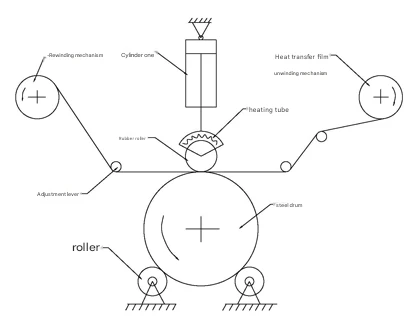
Pencetakan transfer panas memanfaatkan panas dan tekanan untuk mentransfer gambar dari kertas atau film transfer ke substrat.
Panas tersebut melelehkan lapisan perekat atau lapisan pelepas pada media transfer, sehingga gambar dapat menempel pada permukaan produk.
Aplikasi Umum
- Tekstil
- Produk kulit
- Produk promosi
- Barang dagangan khusus
Transfer dengan Mesin Press Panas vs Transfer Sublimasi
Transfer dengan Mesin Press Panas
Metode ini biasanya menggunakan teknik sablon atau cetak gravure untuk mencetak gambar pada kertas transfer atau film plastik. Desain tersebut kemudian ditransfer dengan memanfaatkan panas dan tekanan.
Transfer Sublimasi
Pencetakan sublimasi menggunakan tinta sublimasi khusus dan kertas sublimasi.
Selama proses perpindahan panas:
- Tinta sublimasi berubah menjadi gas
- Gas tersebut menembus permukaan yang dilapisi
- Gambar tersebut tertanam secara permanen ke dalam bahan tersebut
👉 Transfer sublimasi umumnya digunakan untuk:
- Kain
- Keramik
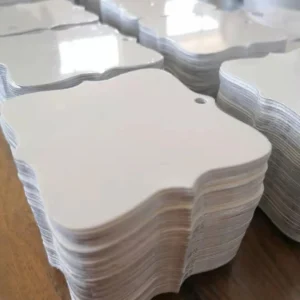
- Lembaran aluminium sublimasi
- Panel foto logam
2. Pencetakan Transfer Air
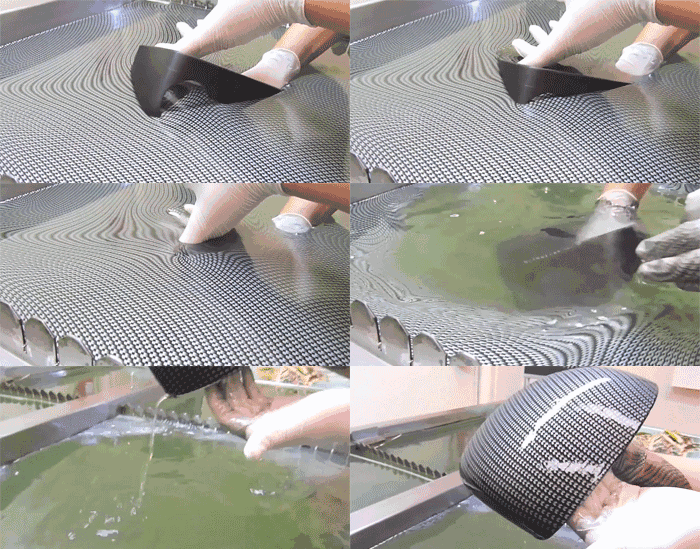
Proses pencetakan transfer air memanfaatkan tekanan air dan zat pengaktif untuk mentransfer gambar dari lapisan khusus yang larut dalam air ke substrat.
Berbeda dengan perpindahan panas, perpindahan air tidak memerlukan suhu atau tekanan tinggi, sehingga sangat cocok untuk:
- Bahan tipis
- Produk yang sensitif terhadap panas
- Permukaan lengkung yang kompleks
Dua Jenis Utama Transfer Air
A. Transfer Stiker Air
Umumnya digunakan untuk:
- Logo
- Teks
- Gambar kecil
B. Transfer Hidrografi (Pencelupan Air)
Proses transfer hidrografik melapisi seluruh permukaan produk dengan lapisan grafis.
Film ini larut dalam air, sehingga desainnya dapat menyesuaikan diri dengan bentuk-bentuk yang rumit.
👉 Umumnya digunakan untuk:
- Suku cadang otomotif
- Helm
- Elektronik konsumen
- Produk dekoratif
Berkat daya tutup permukaannya yang sangat baik, teknik transfer hidrografik menghasilkan tampilan yang mirip dengan hasil pengecatan.
3. Pencetakan Transfer Udara (Transfer Gas)
Pencetakan transfer udara memanfaatkan tekanan gas untuk mentransfer tinta sublimasi ke substrat.
Metode ini memanfaatkan proses sublimasi, di mana tinta berubah dari bentuk padat menjadi gas akibat panas.
👉 Penggunaan umum antara lain:
- Pencetakan tekstil
- Bahan lunak
- Pencetakan dekoratif
4. Pencetakan Transfer Layar
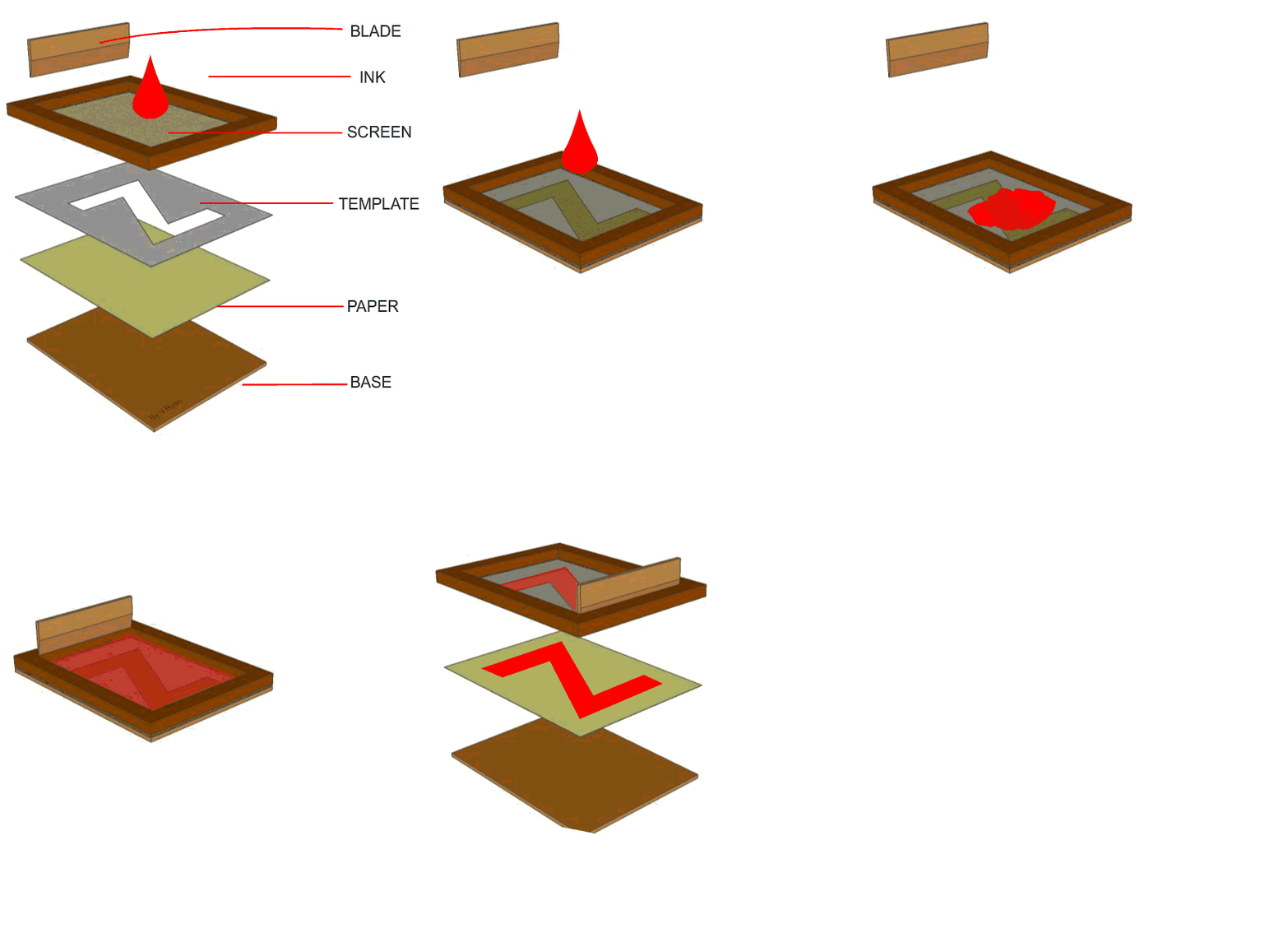
Pada proses pencetakan transfer layar, terlebih dahulu diaplikasikan perekat ke substrat, kemudian menggunakan squeegee untuk memberikan tekanan dan mentransfer gambar.
Keuntungan
- Cocok untuk warna polos
- Hemat biaya untuk produksi massal
Keterbatasan
- Sulit untuk menangkap detail dalam foto
- Gradasi warna bergantung pada pola titik-titik
5. Pencetakan Transfer Film
Pencetakan transfer film menggunakan kertas transfer yang dilengkapi lapisan perekat.
Di bawah suhu dan tekanan tinggi, grafis berperekat tersebut ditransfer ke permukaan produk.
👉 Sering digunakan untuk:
- Pakaian
- Logo
- Label hias
6. Pencetakan Transfer Sublimasi
Transfer sublimasi dianggap sebagai salah satu teknologi transfer paling mutakhir saat ini.
Aplikasi ini menggunakan:
- Tinta sublimasi
- Kertas transfer sublimasi
- Peralatan perpindahan panas
Keuntungan
- Warna-warna cerah
- Kejernihan gambar yang tinggi
- Ketahanan yang tahan lama
- Tidak ada retak atau mengelupas
👉 Umumnya digunakan untuk:
- Panel foto
- Hadiah yang dipersonalisasi
- Kosong logam sublimasi
- Produk dekorasi rumah
7. Sablon vs Pencetakan Transfer Digital
Sablon
Sablon menggunakan teknik pencetakan berlapis-lapis untuk mereproduksi gambar.
Keuntungan
- Cocok untuk produksi dalam skala besar
- Cakupan warna yang kuat
Keterbatasan
- Kinerja gradien yang buruk
- Tidak cocok untuk gambar berkualitas foto
Pencetakan Transfer Digital
Pencetakan transfer digital menggunakan gambar yang dirancang dengan komputer dan dicetak langsung ke media transfer melalui printer digital.
Gambar tersebut kemudian dipindahkan ke substrat menggunakan peralatan transfer panas.
Keuntungan
- Resolusi gambar yang tinggi
- Sangat cocok untuk grafis dan foto yang detail
- Produksi dalam jumlah kecil yang fleksibel
👉 Metode ini semakin populer di pasar percetakan yang disesuaikan dan dipesan khusus.
8. Pencetakan Transfer Langsung vs Pencetakan Transfer Tidak Langsung
Pencetakan Transfer Langsung (Pencetakan Pad)
Proses pad printing mentransfer tinta dari pelat yang diukir ke bantalan silikon, yang kemudian mentransfer gambar tersebut ke permukaan produk.
Keuntungan
- Cocok untuk produk yang melengkung atau tidak beraturan
- Penentuan posisi yang akurat
- Kecepatan produksi yang tinggi
Setelah dicetak, tinta dikeringkan melalui:
- Perlakuan panas
- Paparan sinar UV
Pencetakan Transfer Tidak Langsung
Pencetakan transfer tidak langsung mengandalkan bahan perantara seperti kertas transfer.
Proses produksi kertas transfer lebih rumit karena mencakup:
- Lapisan kertas dasar
- Lapisan tinta
- Lapisan perekat
Keuntungan
- Akurasi pencetakan yang tinggi
- Daya rekat yang kuat
- Kecepatan transfer yang tinggi
- Tingkat cacat yang rendah
Keterbatasan
- Biaya yang lebih tinggi untuk produksi dalam jumlah kecil
👉 Namun, untuk produk dekoratif kelas atas, pencetakan transfer tidak langsung menawarkan sejumlah keunggulan yang signifikan.
Metode Pencetakan Transfer Mana yang Paling Populer Saat Ini?
Saat ini, dua teknologi pencetakan transfer yang paling banyak digunakan adalah:
- Pencetakan perpindahan panas
- Pencetakan transfer air
Di antara metode-metode tersebut, transfer air menawarkan fleksibilitas penerapan yang lebih luas, sementara transfer panas sublimasi tetap menjadi salah satu pilihan terbaik untuk:
- Panel foto logam
- Tekstil
- Produk yang disesuaikan
- Grafik beresolusi tinggi
Cara Memilih Metode Pencetakan Transfer yang Tepat
Metode terbaik bergantung pada:
- Jenis bahan
- Bentuk permukaan
- Volume produksi
- Kualitas gambar yang diperlukan
- Pertimbangan biaya
Aplikasi yang Direkomendasikan
| Metode Transfer | Paling Cocok Untuk |
|---|---|
| Transfer Sublimasi | Aluminium, kain, panel foto |
| Pengaliran Air | Produk yang melengkung dan tidak beraturan |
| Transfer Layar | Produksi massal |
| Transfer Digital | Pencetakan foto sesuai pesanan |
| Pencetakan Pad | Produk-produk kecil yang bentuknya tidak beraturan |
FAQ (Pertanyaan yang Sering Diajukan)
Pertanyaan 1: Apa itu pencetakan transfer?
A: Pencetakan transfer adalah proses di mana gambar dipindahkan dari media perantara ke substrat akhir dengan menggunakan panas, tekanan, air, atau metode lainnya.
Pertanyaan 2: Apa perbedaan antara perpindahan panas dan sublimasi?
A: Proses transfer panas menggunakan lapisan perekat, sedangkan sublimasi mengubah tinta menjadi gas yang kemudian terikat secara permanen dengan bahan dasar.
Pertanyaan 3: Metode pencetakan transfer mana yang paling cocok untuk panel foto logam?
A: Pencetakan transfer sublimasi secara luas dianggap sebagai pilihan terbaik untuk panel foto aluminium berlapis.
Pertanyaan 4: Bahan apa saja yang bisa digunakan untuk transfer sublimasi?
A: Bahan-bahan yang umum digunakan antara lain kain poliester, keramik, dan lembaran aluminium berlapis.
Pertanyaan 5: Apakah perpindahan air lebih baik daripada perpindahan panas?
A: Itu tergantung pada penggunaannya. Transfer air lebih cocok untuk bentuk yang rumit, sedangkan transfer panas sublimasi menghasilkan kualitas gambar yang lebih baik.
Kesimpulan
Teknologi pencetakan transfer terus berkembang, menawarkan lebih banyak kemungkinan untuk penyesuaian dan dekorasi berkualitas tinggi di berbagai sektor industri.
Mulai dari pencetakan transfer air hingga pencetakan sublimasi, setiap metode memiliki keunggulan tersendiri tergantung pada produk dan penggunaannya.
👉 Untuk kualitas gambar yang prima dan daya tahan yang tinggi—terutama pada lembaran aluminium sublimasi dan panel foto logam—transfer sublimasi tetap menjadi salah satu solusi paling efektif yang tersedia saat ini.