Transfer printing technology is widely used across industries such as packaging, textiles, advertising, home décor, and personalized products. It has become an essential part of modern printing processes—especially for products with irregular surfaces or materials that are difficult to print directly.
In this guide, we’ll explore the most common types of transfer printing methods, how they work, and where they are used.
What Is Transfer Printing?
Transfer printing is a printing technique that transfers images or graphics from an intermediate carrier onto the final substrate using pressure, heat, water, or other methods.
This process is especially useful for:
- Curved surfaces
- Pre-formed products
- Soft materials
- Thin substrates
- Products unsuitable for direct printing
Instead of printing directly onto the object, the design is first printed onto a transfer medium such as transfer paper or film, then transferred to the final product through heating, moisture, pressure, or chemical activation.
Types of Transfer Printing Methods
Transfer printing can be classified in several ways depending on the transfer mechanism, ink type, printing process, and substrate material.
1. Heat Transfer Printing
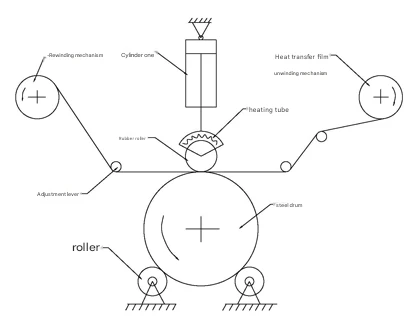
Heat transfer printing uses heat and pressure to transfer graphics from transfer paper or film onto the substrate.
The heat melts the adhesive or release layer on the transfer medium, allowing the image to bond with the product surface.
一般的な用途
- 繊維製品
- Leather products
- プロモーション製品
- Custom merchandise
Heat Press Transfer vs Sublimation Transfer
Heat Press Transfer
This method typically uses screen printing or gravure printing to print images onto transfer paper or plastic film. The design is then transferred using heat and pressure.
Sublimation Transfer
Sublimation printing uses special sublimation inks and sublimation paper.
During the heat transfer process:
- The sublimation ink turns into gas
- The gas penetrates the coated surface
- The image becomes permanently embedded into the material
👉 Sublimation transfer is commonly used for:
- Fabrics
- Ceramics
- 昇華アルミシート
- 金属製フォトパネル
2. Water Transfer Printing
Water transfer printing uses water pressure and activating agents to transfer graphics from a special water-soluble film onto the substrate.
Unlike heat transfer, water transfer does not require high temperature or pressure, making it ideal for:
- Thin materials
- Heat-sensitive products
- Complex curved surfaces
Two Main Types of Water Transfer
A. Water Decal Transfer
Mainly used for:
- Logos
- Text
- Small graphics
B. Hydrographic (Water Dipping) Transfer
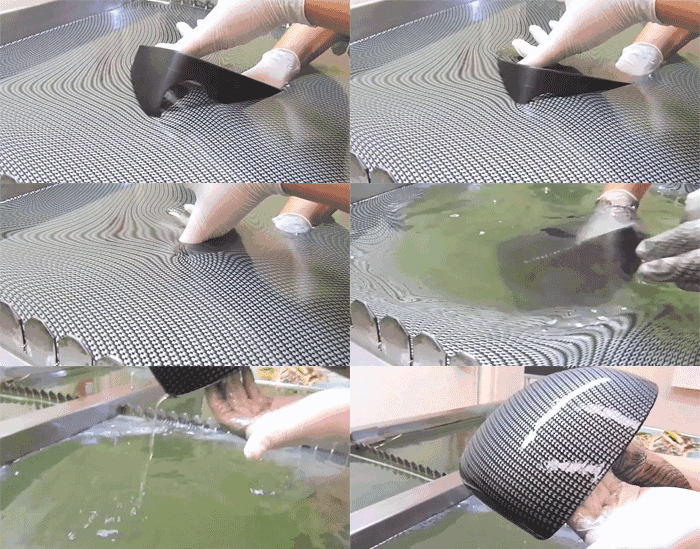
Hydrographic transfer wraps the entire product surface with a graphic layer.
The film dissolves in water, allowing the design to conform around complex shapes.
👉 Commonly used for:
- Automotive parts
- Helmets
- Consumer electronics
- Decorative products
Because of its excellent surface coverage, hydrographic transfer creates a painted-like appearance.
3. Air Transfer Printing (Gas Transfer)
Air transfer printing uses gas pressure to transfer sublimation ink onto the substrate.
This method relies on the sublimation process, where ink changes from solid to gas under heat.
👉 Common applications include:
- テキスタイルプリント
- Soft materials
- Decorative printing
4. Screen Transfer Printing
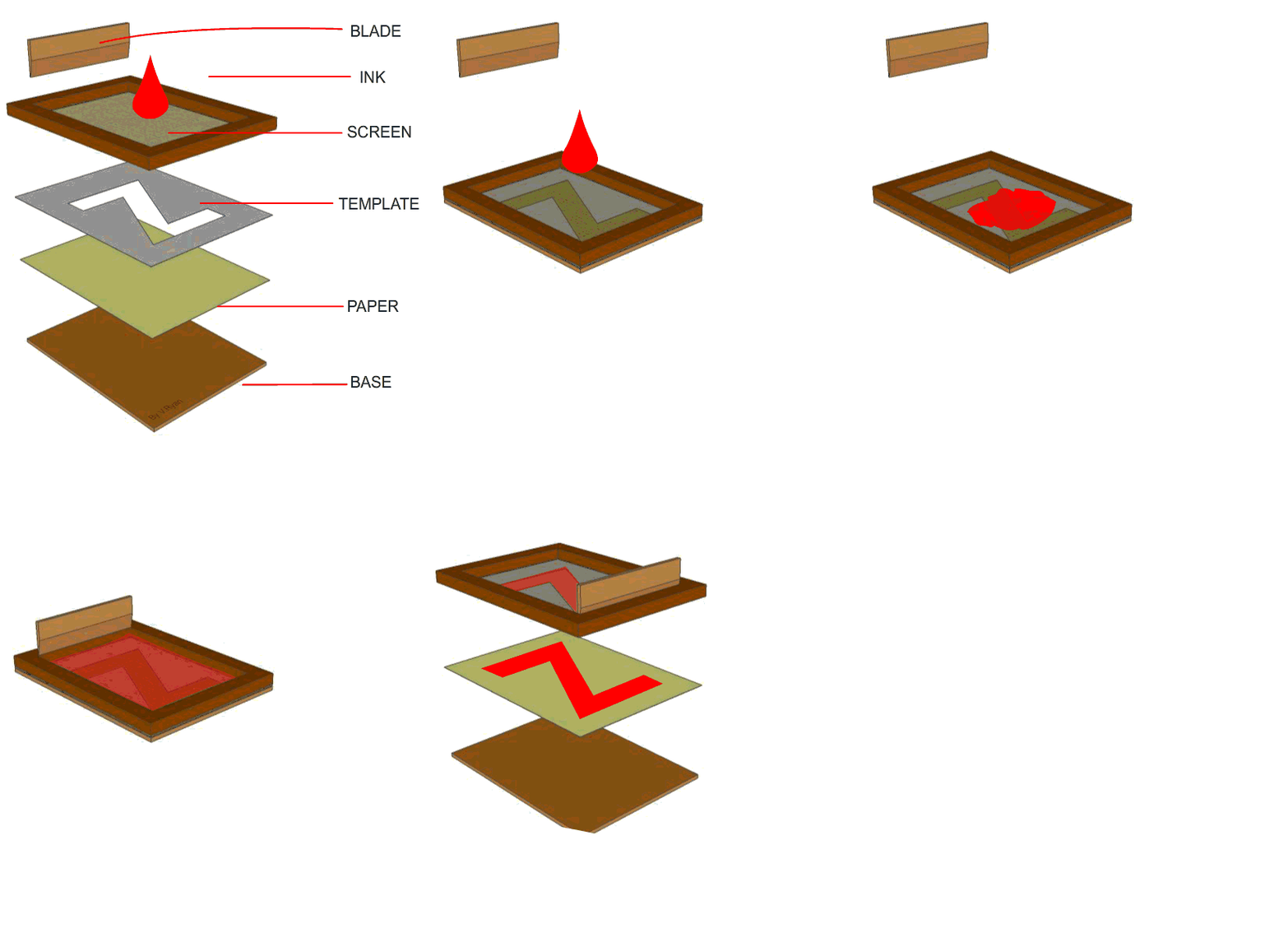
Screen transfer printing first applies adhesive onto the substrate, then uses a squeegee to apply pressure and transfer the image.
メリット
- Good for solid colors
- Cost-effective for mass production
Limitations
- Difficult to achieve photographic detail
- Color gradients depend on dot patterns
5. Film Transfer Printing
Film transfer printing uses transfer paper containing adhesive layers.
Under high temperature and pressure, the adhesive graphics are transferred onto the product surface.
👉 Often used for:
- Garments
- Logos
- Decorative labels
6. Sublimation Transfer Printing
Sublimation transfer is considered one of the most advanced transfer technologies today.
It uses:
- 昇華型インク
- Sublimation transfer paper
- Heat transfer equipment
メリット
- 鮮やかな色
- High image clarity
- 長持ちする耐久性
- ひび割れや剥離がない
👉 Widely used for:
- 写真パネル
- オーダーメイドのギフト
- 昇華メタルブランク
- Home décor products
7. Screen Printing vs Digital Transfer Printing
Screen Printing
Screen printing uses layered color printing to reproduce images.
メリット
- Suitable for large production runs
- Strong color coverage
Limitations
- Poor gradient performance
- Not ideal for photo-quality images
Digital Transfer Printing
Digital transfer printing uses computer-designed images printed directly onto transfer media through digital printers.
The image is then transferred to the substrate using heat transfer equipment.
メリット
- High image resolution
- Excellent for detailed graphics and photos
- Flexible short-run production
👉 This method has become increasingly popular in personalized and custom printing markets.
8. Direct Transfer Printing vs Indirect Transfer Printing
Direct Transfer Printing (Pad Printing)
Pad printing transfers ink from an engraved plate onto a silicone pad, which then transfers the image onto the product surface.
メリット
- Suitable for curved or irregular products
- Accurate positioning
- Fast production speed
After printing, the ink is cured through:
- Heat treatment
- UV exposure
Indirect Transfer Printing
Indirect transfer printing relies on intermediate materials such as transfer paper.
Transfer paper production is more complex because it includes:
- Base paper layer
- Ink layer
- Adhesive layer
メリット
- High printing accuracy
- Strong adhesion
- Fast transfer speed
- Low defect rate
Limitations
- Higher cost for small production runs
👉 However, for high-end decorative products, indirect transfer printing provides significant advantages.
Which Transfer Printing Method Is Most Popular Today?
Currently, the two most widely used transfer printing technologies are:
- 熱転写印刷
- Water transfer printing
Among them, water transfer offers broader application flexibility, while sublimation heat transfer remains one of the best choices for:
- 金属製フォトパネル
- 繊維製品
- Personalized products
- High-resolution graphics
How to Choose the Right Transfer Printing Method
The best method depends on:
- Material type
- Surface shape
- 生産量
- Required image quality
- Cost considerations
Recommended Applications
| Transfer Method | おすすめ |
|---|---|
| Sublimation Transfer | Aluminum, fabric, photo panels |
| Water Transfer | Curved and irregular products |
| Screen Transfer | Mass production |
| Digital Transfer | Custom photo printing |
| Pad Printing | Small irregular products |
FAQ(よくある質問)
Q1: What is transfer printing?
A: Transfer printing is a process where graphics are transferred from an intermediate medium onto a final substrate using heat, pressure, water, or other methods.
Q2: What is the difference between heat transfer and sublimation?
A: Heat transfer uses adhesive layers, while sublimation converts ink into gas that permanently bonds with the substrate.
Q3: Which transfer printing method is best for metal photo panels?
A: Sublimation transfer printing is widely considered the best choice for coated aluminum photo panels.
Q4: What materials can be used for sublimation transfer?
A: Common materials include polyester fabrics, ceramics, and coated aluminum sheets.
Q5: Is water transfer better than heat transfer?
A: It depends on the application. Water transfer is better for complex shapes, while sublimation heat transfer offers superior image quality.
結論
Transfer printing technology continues to evolve, offering more possibilities for customization and high-quality decoration across industries.
From water transfer to sublimation printing, each method has unique advantages depending on the product and application.
👉 For premium image quality and durability—especially on sublimation aluminum sheets and metal photo panels—sublimation transfer remains one of the most effective solutions available today.