
Printing on metal has become increasingly popular across industries such as signage, home décor, photography, branding, and industrial identification. Compared with paper or plastic, metal prints offer superior durability, a premium appearance, and long-term color stability.
But how exactly do you print on metal?
This guide walks you through the most common metal printing methods, required materials, pros and cons, and how to choose the right technique for your application.
Can You Print Directly on Metal?
Yes—but not all metal printing methods work the same way, and not all metals are printable without preparation.
In most cases, successful metal printing depends on:
The type of metal (aluminum, steel, stainless steel, etc.)
Whether the metal has a special coating
The printing technology used
Aluminum is by far the most widely used metal for printing due to its lightweight, flatness, corrosion resistance, and compatibility with multiple printing processes.
The Main Methods of Printing on Metal
Sublimation Printing on Metal (Most Popular for Photos & Décor)
Best for:
Photo panels, wall art, ornaments, nameplates, bookmarks, dog tags
How it works:
Sublimation printing uses heat and pressure to transfer dye into a polymer-coated aluminum surface. The ink turns into gas and permanently bonds with the coating.
Requirements:
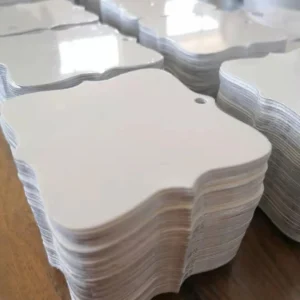
Sublimation aluminum sheets with polyester coating
Heat press
Sublimation ink and transfer paper
Advantages:
Vivid colors and photo-level detail
Scratch-resistant and fade-resistant
Ink becomes part of the surface (won’t peel)
Limitations:
Requires specially coated metal
Cannot print white ink
Mostly used on aluminum, not steel
✅ Ideal if you want high-quality metal photo prints or decorative products.
UV LED Printing on Metal
Best for:
Signage, industrial panels, decorative boards, branding plates
How it works:
UV printers spray UV-curable ink directly onto the metal surface. UV LED lamps instantly harden the ink.
Requirements:
Flat metal sheets (aluminum recommended)
Optional adhesion primer or coating
Advantages:
Can print directly on raw or coated metal
Supports white ink and layered effects
Suitable for indoor and outdoor use
Limitations:
Ink sits on the surface (less durable than sublimation)
Higher equipment cost
✅ Best for commercial signage and functional metal prints.
Screen Printing on Metal
Best for:
Industrial labels, control panels, logos, serial plates
How it works:
Ink is pushed through a stencil (screen) onto the metal surface.
Advantages:
Very durable ink layers
Excellent for mass production
Cost-effective for simple designs
Limitations:
Not suitable for photo-level images
High setup cost for small batches
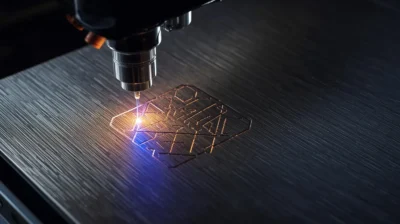
Laser Engraving on Metal (No Ink Printing)
Best for:
Barcodes, logos, serial numbers, decorative engraving
How it works:
A laser removes or marks the metal surface, sometimes revealing a contrasting color on anodized aluminum.
Advantages:
Permanent marking
No ink or consumables
Extremely durable
Limitations:
Cannot print full colors
Mostly monochrome results
What Type of Metal Is Best for Printing?
Aluminum (Recommended)
Lightweight and corrosion-resistant
Compatible with sublimation, UV printing, screen printing, and laser engraving
Excellent flatness for high-resolution prints
Stainless Steel
Strong and durable
Typically used for laser engraving or UV printing
Steel
Industrial use
Requires surface treatment before printing
➡️ For most printing applications, aluminum is the best and most versatile choice.
Sublimation Metal vs UV Printing Metal: What’s the Difference?
| Feature | Sublimation Metal | UV Printing Metal |
|---|---|---|
| Coating required | Yes (polyester) | Optional |
| Ink penetration | Into coating | On surface |
| Durability | Very high | Medium–high |
| Color vibrancy | Excellent | Very good |
| White ink | Not supported | Supported |
| Best use | Photos, décor | Signage, branding |
What Do You Need to Start Printing on Metal?
Depending on the method:
For sublimation printing:
Sublimation aluminum blanks
Heat press
Sublimation printer & ink
For UV printing:
UV flatbed printer
Aluminum sheets (with or without coating)
Adhesion treatment (recommended)
For laser engraving:
Fiber or CO₂ laser machine
Anodized or coated aluminum
Common Applications of Metal Printing
Photo metal prints & wall art
Outdoor and indoor signage
Nameplates & industrial labels
Promotional gifts
Home décor panels
Branded ornaments and frames
Where to Buy Printable Metal Sheets?
For best results, choose suppliers that:
Specialize in printing-ready aluminum
Offer consistent coating quality
Provide custom sizes and shapes
Support both material supply and printing services
Professional sublimation aluminum manufacturers can supply metal sheets optimized for color accuracy, adhesion, and durability.
FAQ: How to Print on Metal
Can I print on metal with a regular inkjet printer?
No. Regular inkjet printers cannot bond ink to metal without special coatings or transfer methods.
Is metal printing waterproof?
Yes—especially sublimation metal prints and UV-printed aluminum.
Which metal printing method lasts the longest outdoors?
Sublimation aluminum and properly cured UV printing both offer excellent outdoor durability.
Can I print custom shapes on metal?
Yes. Many suppliers offer CNC-cut aluminum blanks in custom shapes.
Conclusion
Understanding how to print on metal starts with choosing the right metal, the right coating, and the right printing technology. Whether you’re producing decorative photo panels, industrial signage, or branded promotional items, metal printing offers unmatched durability and visual impact.
If you want high-quality results, always start with printing-ready aluminum sheets designed specifically for your chosen printing method.